Echo Run

Echo Run

Echo Run

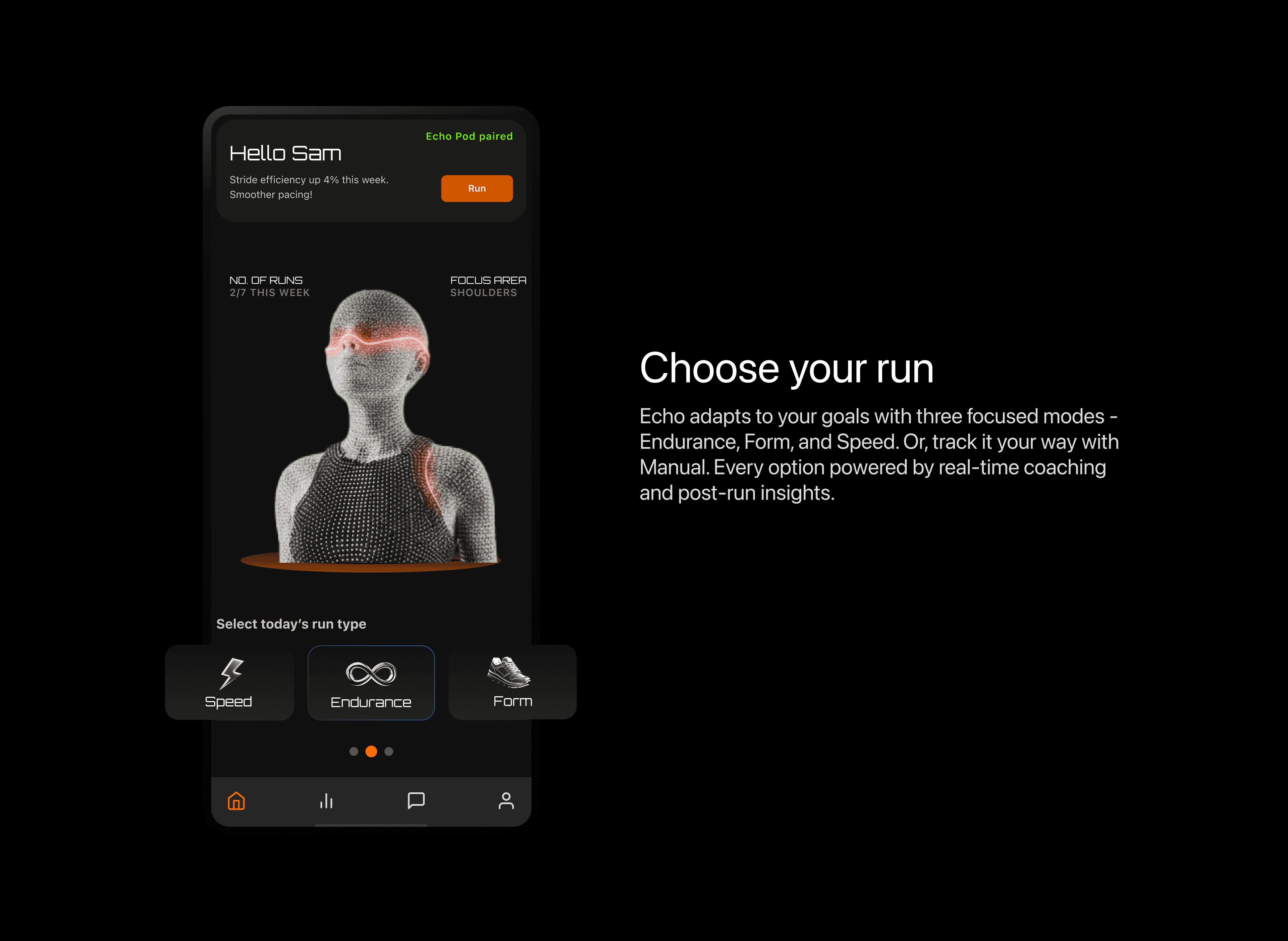
Running is the world’s most accessible sport, yet 46% of recreational runners get injured each year. This project explores how design can go beyond simple data tracking to deliver real-time visibility and actionable guidance, helping runners improve form and reduce the risk of injury.

Running is the world’s most accessible sport, yet 46% of recreational runners get injured each year. This project explores how design can go beyond simple data tracking to deliver real-time visibility and actionable guidance, helping runners improve form and reduce the risk of injury.

Role

UX designer

Scope

24 hr design challenge

Time line

Sep 25

Context

Context

Running is often seen as the simplest way to stay fit—no equipment, no training, just step out and start. But that simplicity is deceptive.

Nearly 1 in 2 recreational runners get injured every year, most commonly due to poor form and overuse (Ipsos, 2021; Nielsen, 2020).

These are not elite athletes—they’re everyday runners trying to stay consistent. As fatigue sets in, form gradually breaks down. Without real-time feedback, most don’t notice until pain forces them to stop.

Today, meaningful feedback is either:

  • Expensive (coaching)

  • Inaccessible (lab-based gait analysis)

  • Delayed (post-run data)

Most runners are left guessing: “Am I doing this right?”
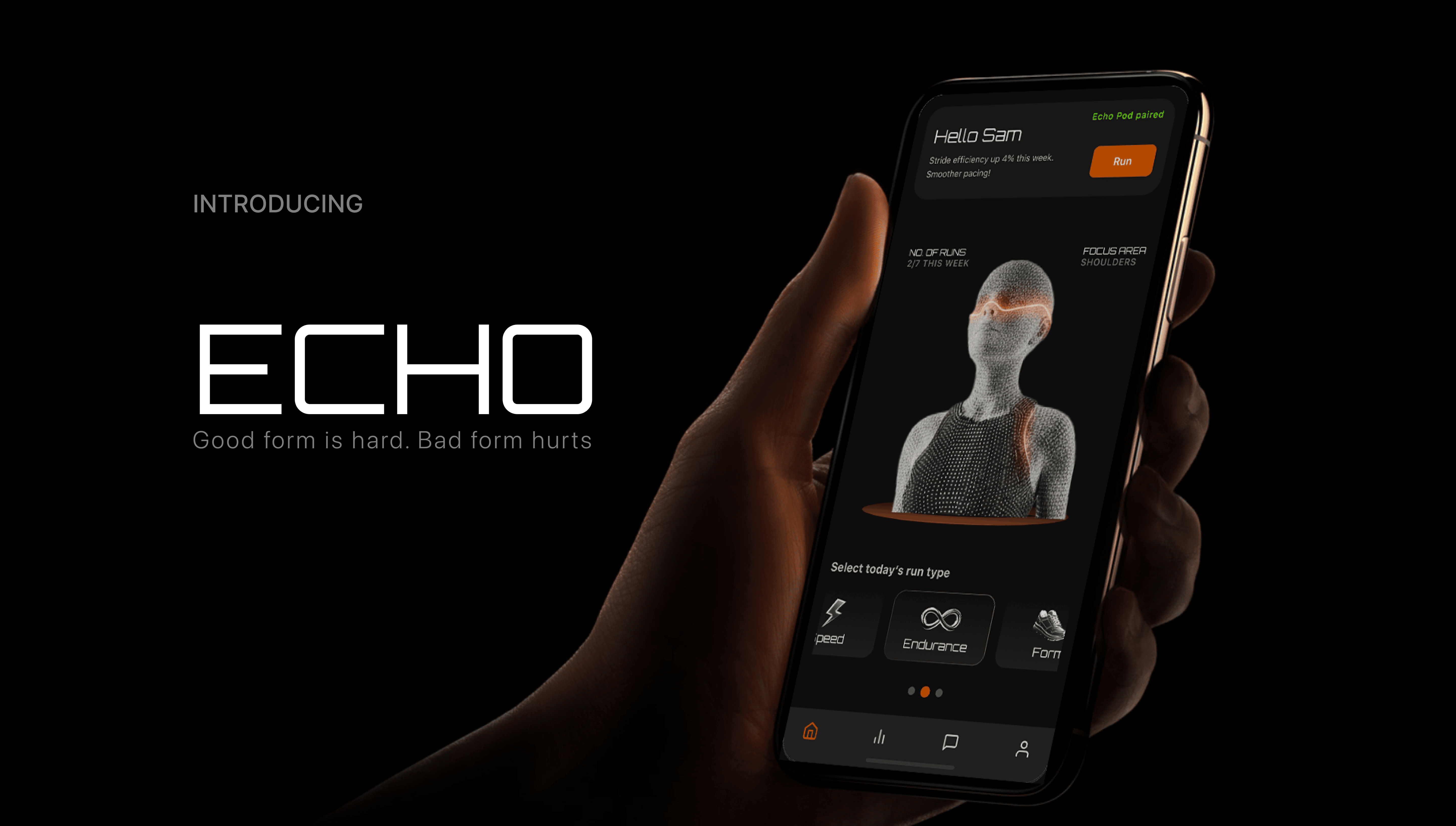
Recreational runners lack real-time, accessible feedback on their running form, leading to preventable injuries.

Recreational runners lack real-time, accessible feedback on their running form, leading to preventable injuries.

Insight

Insight

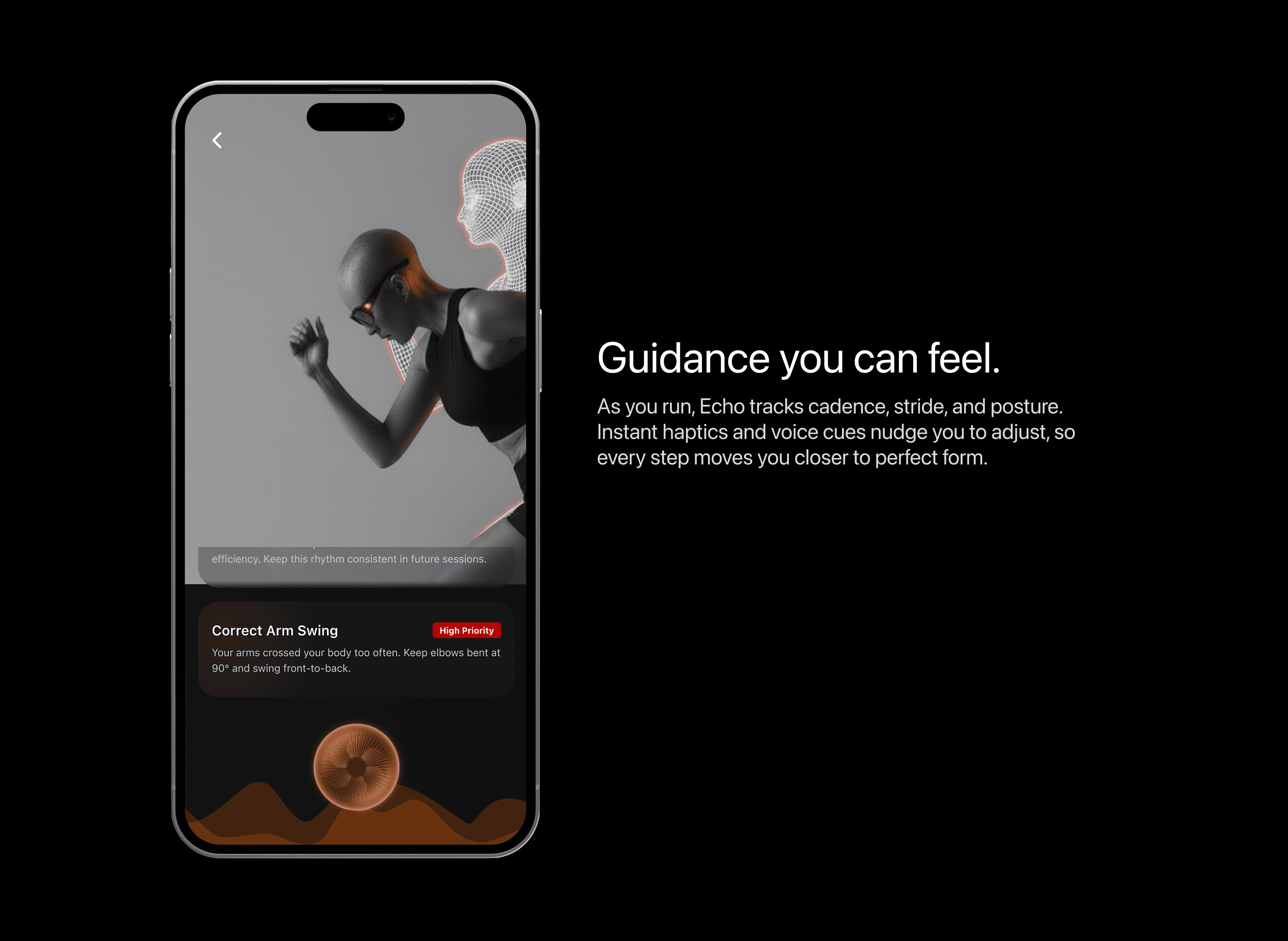
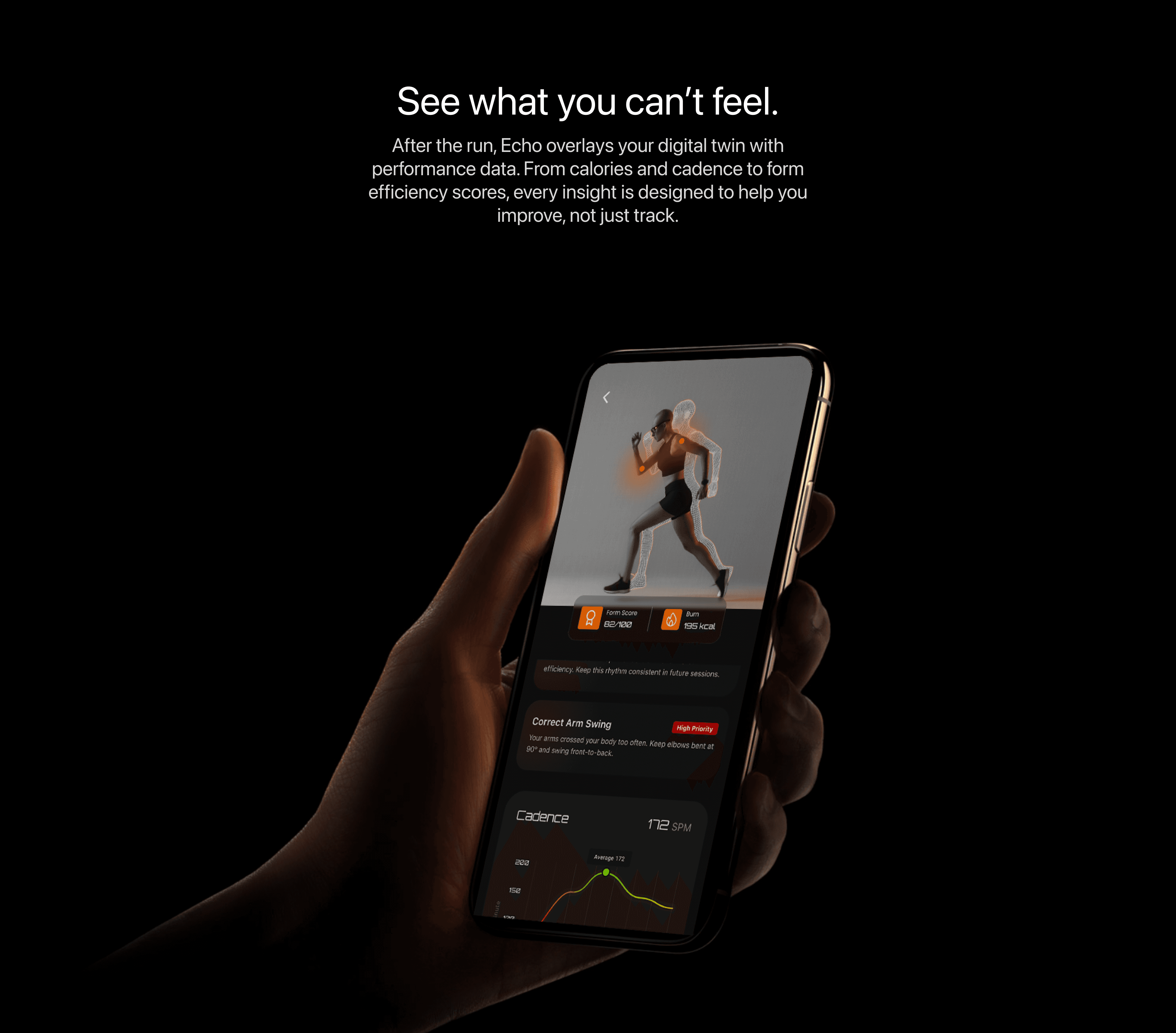
Runners don’t need more data. They need timely, intuitive cues they can act on while running, not after. Most existing tools are built around measurement—pace, cadence, stride length, heart rate. But these metrics are retrospective. They tell runners what happened, not when to correct.


In reality, running form breaks down gradually under fatigue—posture shifts, stride length increases, impact intensifies. These changes happen in motion, when runners have the least capacity to interpret data. By the time feedback is reviewed, the moment to act has passed.

Working with a third-party research agency, we interviewed frequent flight bookers familiar with OTAs, airline websites, and the Air India booking flow. Users found the experience cluttered, with distracting promotions and repeated information often overshadowing key details. Many also struggled to track their progress through the journey, leading to uncertainty and reduced confidence while booking.

How might we help runners correct their form in real-time, without interrupting their run?

How might we help runners correct their form in real-time, without interrupting their run?